

Geographical Advantages of Iran for CIS Transit
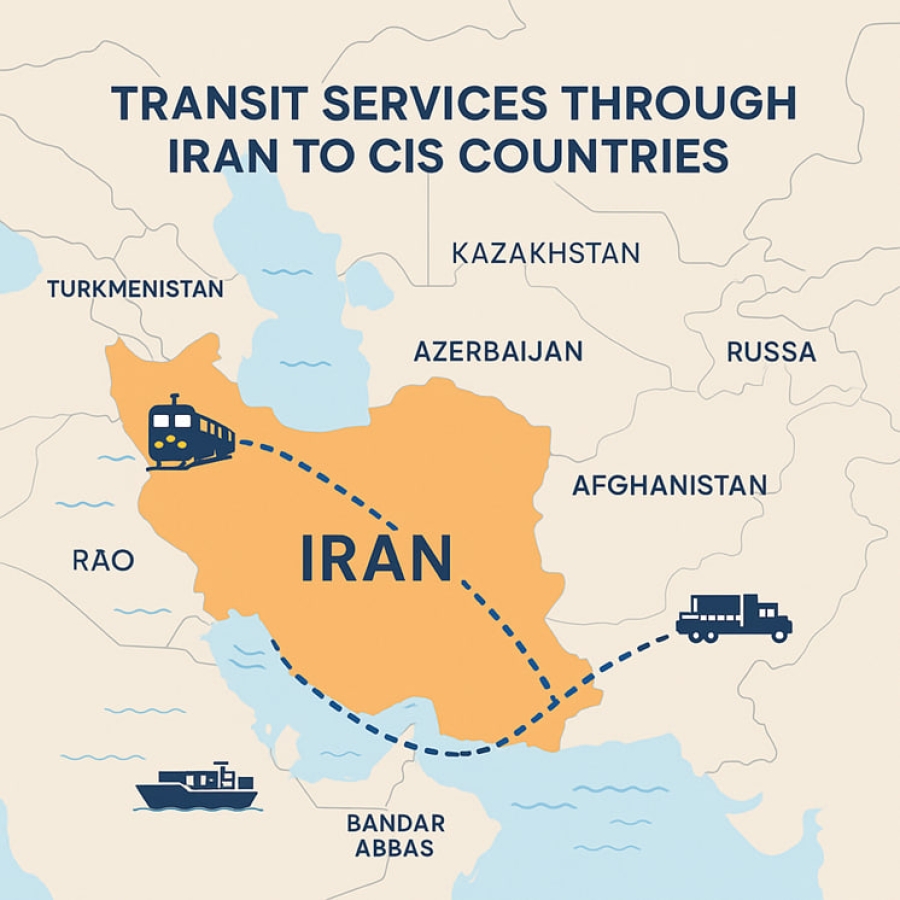
Iran’s unique geographical position establishes it as a cornerstone for transit services through Iran to CIS countries, including Russia, Azerbaijan, Uzbekistan, and Turkmenistan. Its strategic location and robust infrastructure offer unparalleled advantages for facilitating trade and logistics to these landlocked and semi-landlocked nations. This section explores Iran’s geographical strengths, emphasizing their role in enhancing regional connectivity.
1. Strategic Land Bridge
Iran’s central location between Asia, Europe, and the Middle East positions it as a vital Iran logistics hub for transit services through Iran to CIS countries. The INSTC corridor connects Russia and Central Asia to the Persian Gulf, reducing transit times by up to 40% and costs by 30% compared to the Suez Canal route (clearias). Iran’s 2,000 km of southern coastline, including Bandar Abbas Port, provides landlocked CIS nations like Uzbekistan with direct access to global markets.
2. Caspian Sea Connectivity
Iran’s northern border along the Caspian Sea enables efficient maritime and land links to CIS countries via the Caspian Sea route. Ports like Amirabad and Anzali support transit services through Iran to CIS countries, facilitating trade with Russia and Azerbaijan. This proximity streamlines energy transit, such as oil swaps with Kazakhstan, enhancing Iran’s role in Iran-CIS trade.
3. Extensive Border Network
With over 2,000 km of borders with CIS nations like Azerbaijan and Turkmenistan, Iran supports seamless cross-border trade. The Sarakhs rail link serves as a critical rail hub for rail freight CIS, connecting to Uzbekistan and beyond. These border crossings enhance CIS market access, making Iran a gateway for Central Asian trade.
4. Robust Port Infrastructure
Iran’s southern ports, notably Bandar Abbas port and Chabahar port transit, are pivotal for CIS-bound cargo. Bandar Abbas handles millions of tons annually, while Chabahar offers an alternative route to Central Asia via the Chabahar-Milak Corridor. These ports, combined with Iran’s rail network, bolster central Asia trade routes.
5. Role in Global Corridors
Iran’s participation in the INSTC corridor and Belt and Road Initiative Iran amplifies its transit capabilities. These corridors shorten routes to CIS countries, enhancing Iran export logistics. However, Geopolitical Transit Challenges, such as sanctions, require strategic navigation to maintain efficiency.

From Ports to Railways: Key Transit Routes through Iran
Key routes, including rail, road, and maritime pathways, leverage Iran’s geographical advantages to facilitate transit services through Iran to CIS countries, particularly landlocked nations such as Uzbekistan, Turkmenistan, and Kazakhstan. Below, the primary transit routes are detailed.
1. International North-South Transport Corridor (INSTC)
The INSTC corridor is a 7,200-km multimodal network of ship, rail, and road routes connecting India, Iran, Azerbaijan, Russia, and Central Asia. It links Bandar Abbas port to CIS countries via Caspian Sea route ports like Amirabad and Anzali, and extends to Russia and Central Asia through Azerbaijan’s rail network. The incomplete Rasht-Astara railway segment limits full rail connectivity, requiring truck transfers at the Astara border, which slows Iran-CIS trade.
2. China-Central Asia-West Asia Corridor
This corridor connects China to CIS countries (Kazakhstan, Uzbekistan, Turkmenistan) via Iran, supporting Iran export logistics. The route starts in Xi’an, China, and reaches Iran’s Aprin dry port of Chabahar port transit, reducing transit times from 30–40 days by sea to 15 days by rail. It facilitates central Asia trade routes for electronics, machinery, and textiles, with Sarakhs rail link serving as a key node for Uzbekistan and Turkmenistan. This route aligns with the Belt and Road Initiative Iran, enhancing CIS market access.
3. Chabahar-Milak-Sarakhs Route
The Chabahar port transit route connects Iran’s only oceanic port on the Gulf of Oman to Central Asia via the Sarakhs border with Turkmenistan. The 1,350-km Chabahar-Sarakhs railway, nearing completion, has a capacity of 8.5 million tons annually, offering landlocked CIS countries access to the Indian Ocean. This route supports central Asia trade routes and strengthens Iran-CIS trade by bypassing congested Caspian ports.
4. Caspian Sea Route
Iran’s Caspian Sea ports (Amirabad, Anzali) facilitate transit services through Iran to CIS countries like Russia, Azerbaijan, and Kazakhstan. This route supports rail freight CIS by transferring cargo from ships to trains at ports like Bandar Abbas for onward transport to Central Asia. Iran’s oil swap deals with Kazakhstan and gas pipelines with Turkmenistan leverage this route for energy transit (Middle East Institute).
5. Iran-Turkey-CIS Route
This road-based route connects Turkey to CIS countries via Iran, supporting cross-border customs Iran. Since its launch in October 2021, approximately 1,000 trucks have transited from Turkey to the UAE, carrying consumer goods and machinery. Since October 2021, it has facilitated approximately 1,000 truck transits from Turkey to the UAE, reducing transit time from 21 days by sea to 6 days for routes to the Mediterranean, benefiting regional trade Atlantic Council (Atlantic Council). It aligns with sustainable transit Iran goals by reducing sea freight dependency.
Note:Our main article titled "Overview of Freight Forwarding in Iran" provides comprehensive insights into transportation and logistics through Iran.You can also gain more technical information about transportation through Iran by reading the article "How to Manage Transport and Shipment to/from Iran in 2025 | Complete Logistics Guide."
Economic Benefits of Iran’s Transit Hub
As mentioned, Iran’s strategic location at the crossroads of Asia, Europe, and the Middle East makes it a pivotal hub for transit services through Iran to CIS countries, offering significant economic advantages for foreign nations, particularly the Commonwealth of Independent States (CIS), India, China, and Turkey. By utilizing Iran’s multimodal infrastructure, including ports, railways, and roads, these countries can optimize trade efficiency and access new markets. Below are the key economic benefits for foreign partners leveraging transit services through Iran to CIS countries.
1. Cost and Time Savings in Trade Logistics
Iran's transit hub to the CIS significantly reduces transportation costs and delivery times for landlocked CIS nations such as Uzbekistan, Turkmenistan, and Kazakhstan. By using Iran’s rail and port facilities—such as Bandar Abbas port and Chabahar Port—these countries can cut transit times from 30–40 days by sea to 15–20 days by land, saving logistics costs for goods like minerals, cotton, and agricultural products (Federation of Freight Forwarders Association of India). This efficiency strengthens central Asia trade routes and enhances competitiveness for CIS exporters in global markets Middle East Institute.
2. Expanded Market Access for CIS and Asian Countries
The transit services through Iran to CIS countries provide foreign nations with access to diverse markets, boosting trade volumes. For CIS countries, Iran serves as a gateway to Indian Ocean markets, enabling Uzbekistan and Turkmenistan to export textiles and energy resources to India and East Africa. India benefits from transit services through Iran to CIS countries by reaching Central Asian markets, while China uses Iran to connect to Europe, supporting Belt and Road Initiative Iran goals SpecialEurasia. This expanded access diversifies trade opportunities and reduces reliance on congested maritime routes.
3. Enhanced Trade Route Security
The transit services through Iran to CIS countries offer secure overland routes, mitigating risks associated with maritime chokepoints like the Strait of Hormuz and the Red Sea, where Houthi attacks have increased shipping costs since 2023. For CIS countries and China, Iran’s land-based routes provide a stable alternative, avoiding U.S.-controlled sea lanes and ensuring reliable delivery of goods like electronics and grains. This security enhances Iran export logistics for foreign partners, as evidenced by the China-Iran railway launched in May 2025, which supports Corridor links between Iran and CIS.
4. Investment Opportunities for Foreign Partners
Foreign countries gain economic advantages by investing in Iran’s transit infrastructure, which supports transit services through Iran to CIS countries. India’s $500 million investment in Chabahar Port has increased its capacity to 2 million tons annually, enabling Indian firms to access CIS markets with lower logistics costs (Eurasia Review). China’s investments in Iranian railways and ports align with Belt and Road Initiative Iran, offering Chinese companies profitable joint ventures in logistics hubs like the Aprin dry port SpecialEurasia. These investments yield long-term returns and enhance CIS market access for foreign investors.
Challenges
Despite the benefits, Geopolitical Transit Challenges, including U.S. sanctions and infrastructure inefficiencies, limit Iran’s transit capacity to 17.8 million tons in the last Iranian calendar year, far below its 80-million-ton potential (Stimson Center). Streamlining cross-border customs Iran and improving infrastructure are critical for foreign partners to maximize the economic advantages of transit services through Iran to CIS countries.

Future Prospects for Iran-CIS Transit Collaboration
Iran’s strategic location offers promising prospects for transit services through Iran to CIS countries, fostering deeper collaboration with nations like Uzbekistan, Turkmenistan, and Kazakhstan through rail expansion, global trade integration, and streamlined customs.
By 2030, transit services through Iran to CIS countries could increase trade volumes via the Kazakhstan-Turkmenistan-Iran railway.
Iran’s integration into the Shanghai Cooperation Organization, approved in 2022, supports transit services through Iran to CIS countries, enabling access to European markets in 15 days versus 40 days by sea (Ponderwall).
Agreements with Uzbekistan aim to streamline cross-border customs in Iran, reducing transit delays for CIS exports like textiles. Despite geopolitical transit challenges, including U.S. sanctions limiting Iran’s transit to 17.8 million tons in 2024 against an 80-million-ton potential, joint projects with China under the Belt and Road Initiative Iran could boost CIS market access. By investing in sustainable transit Iran, regional logistics through Iran will strengthen Iran-CIS trade and establish Iran as a vital Iran logistics hub for central Asia trade routes.
Key Takeaways
Iran serves as a strategic gateway for transit services through Iran to CIS countries, leveraging its unique geographical position connecting Asia, Europe, and the Middle East. Key corridors such as the International North-South Transport Corridor (INSTC), Caspian Sea routes, and the Chabahar-Milak-Sarakhs railway reduce transit times by up to 40% and lower costs significantly. These routes provide landlocked CIS nations like Uzbekistan and Turkmenistan with access to global markets, enhancing trade efficiency and security. Despite challenges like geopolitical tensions and sanctions, investments from countries like India and China have strengthened Iran’s transit infrastructure. By expanding rail networks and streamlining customs procedures, Iran aims to increase transit volumes and deepen regional cooperation. This will position Iran as a vital logistics hub, boosting trade connectivity between CIS countries and international markets through optimized transit services through Iran to CIS countries by 2030.
Contact our logistics experts to explore Iran-CIS trade routes. Your business can save 30% on shipping costs with Iran’s routes.
Written by Fatemeh Shokrzadeh