

What Is FTL (Full Truckload) Shipping?
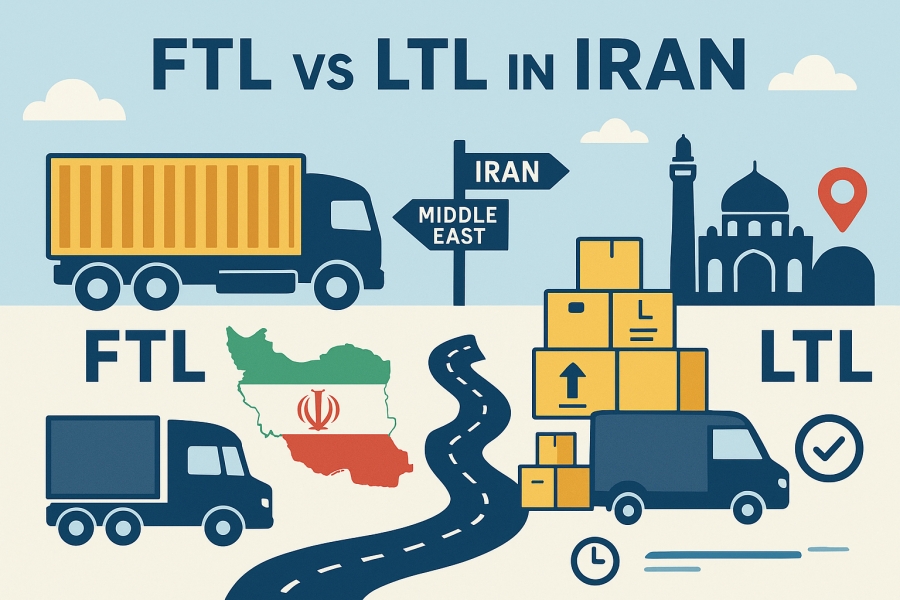
Full Truckload (FTL) shipping refers to a logistics method where an entire truck is dedicated exclusively to a single shipment, regardless of whether the cargo fully fills the truck. This ensures no sharing of space with other shippers' goods, allowing for direct transportation from origin to destination. In the context of FTL vs LTL in Iran, FTL is a widely used option in Iran road freight logistics and plays a key role in Iran cargo transport services along major Iran transit corridors connecting Asia, Europe, and the Middle East.
Advantages of FTL Shipping
FTL truck transport offers several benefits, making it the preferred choice for large or time-sensitive shipments in Iran:
- Faster Transit Times: With dedicated routes and no stops for consolidating other shipments, FTL ensures quicker delivery across Iran’s extensive shipping routes.
- Reduced Handling and Lower Risk of Damage: Cargo is loaded once at the origin and unloaded at the destination, minimizing touchpoints — an advantage in Iran truckload and less-than-truckload shipping operations.
- Cost-Effectiveness for Large Volumes: While upfront costs may be higher, FTL is economical for shipments that fill a truck, avoiding per-unit fees common in shared freight models.
- Flexibility for Diverse Cargo: FTL accommodates oversized, hazardous, or sensitive goods without mixing with other shipments.
- Enhanced Security and Reliability: Dedicated transport provides better tracking and control, crucial for full truckload and partial truckload services in Iran.
Disadvantages of FTL Shipping
Disadvantages of FTL shipping include:
- Higher Upfront Costs: Booking an entire truck for full truckload and partial truckload services in Iran can be costly for smaller shipments, reducing cost-efficiency compared to LTL options.
- Risk of Underutilization: If the truck is not fully loaded, the cost per unit rises, impacting the overall benefits of FTL and LTL freight in Iran.
- Limited Flexibility: Unlike LTL, FTL cannot easily handle smaller, frequent shipments without incurring extra costs, making it less adaptable for dynamic logistics needs in a Middle East logistics hub like Iran.
Applications of FTL in Iran
FTL is ideal for shipments where speed and exclusivity matter, including:
Bulk imports or exports like industrial materials, machinery, or agricultural products moving via international road transport via Iran.
Time-sensitive deliveries, such as perishable goods or urgent e-commerce shipments.
High-volume shipments in manufacturing sectors, particularly for routes to neighboring countries like Turkey, Iraq, or Central Asia. For shipments exceeding 10–15 tons, FTL often proves more reliable, especially with growing demand on Iran freight transport options.

What Is LTL (Less-Than-Truckload) Shipping?
Less-Than-Truckload (LTL) shipping transports smaller freight loads that do not require a full truck. Multiple shipments from different shippers are combined in one vehicle to optimize space and costs. In FTL vs LTL transportation through Iran, LTL leverages the country’s hub-and-spoke terminals and efficient truckload freight solutions in Iran to consolidate shipments for both regional and international trade.
Advantages of LTL Shipping
LTL provides cost-effective and flexible solutions in Iran’s dynamic logistics landscape:
- Cost Savings: Shippers pay only for the space their cargo occupies, sharing the truck with others — ideal for small or budget-conscious businesses.
- Accessibility for Small Shipments: SMEs and smaller exporters can access FTL and LTL freight in Iran without committing to an entire truck.
- Environmental Efficiency: By maximizing truck utilization, LTL reduces empty miles, supporting sustainable practices in Iran logistics company operations.
- Scalability: Carriers can handle varying shipment volumes, with optional services such as liftgate or inside delivery.
- Network Coverage: Extensive networks ensure reliable pickups and deliveries across Iran transit corridor and remote areas, aided by digital tracking solutions.
Disadvantages of LTL Shipping
Disadvantages of FTL shipping include:
- Longer Transit Times: Consolidation and multiple stops extend delivery times compared to truckload freight solutions in Iran, which may affect urgent shipments.
- Higher Risk of Damage or Loss: Multiple handling points increase the chance of cargo damage, especially for sensitive goods transported via Iran cargo transport services.
- Complex Coordination: Managing shipments from various senders requires careful planning by a reputable Iran logistics company, particularly on congested shipping routes through Iran.
- Reduced Control: Cargo owners have less oversight than with FTL, which may affect reliability of international road transport via Iran.
- Capacity Variability: Space availability in LTL vehicles may fluctuate during peak periods, limiting predictability for businesses relying on transit solutions across Iran.
Applications of LTL in Iran
LTL is optimal when full truck capacity isn’t needed:
- Small to Medium Shipments: For loads under 5–10 tons or palletized goods, LTL avoids the cost of unused space in FTL — common for e-commerce, retail, or sample exports in Iran.
- Frequent Low-Volume Deliveries: Businesses sending regular, smaller shipments benefit from consolidated pricing, a key Iran freight transport option.
- Cost Optimization in Volatile Markets: LTL helps manage fuel and tariff fluctuations for non-urgent goods.
- Testing New Markets: For exporters exploring routes to Europe or Asia, LTL offers an economical entry point, though it may be less suitable for urgent or fragile cargo due to multiple stops.
FTL vs LTL: Key Differences for Cargo Owners
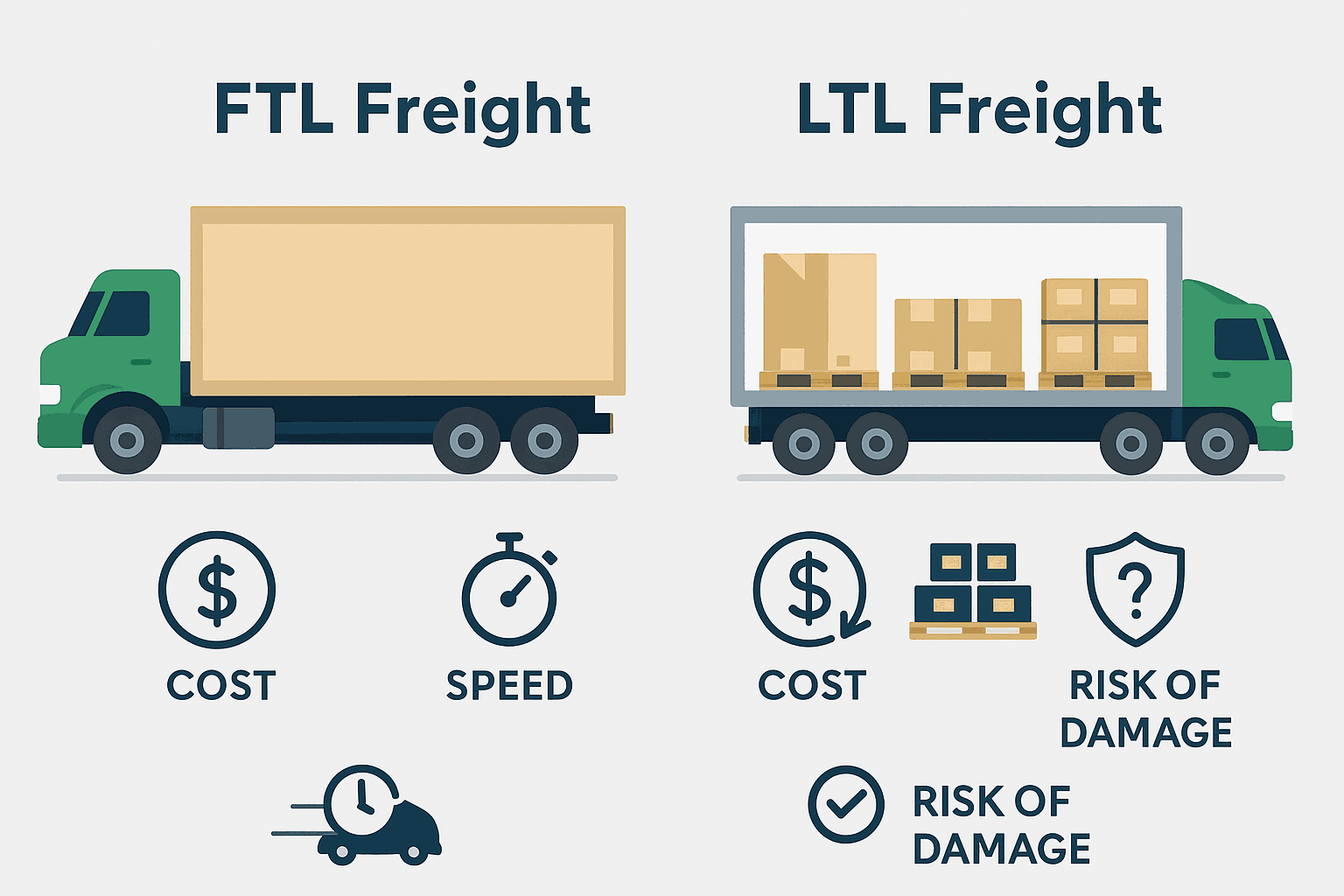
For cargo owners in Iran's freight market, understanding the core distinctions between Full Truckload (FTL) and Less-Than-Truckload (LTL) is essential for optimizing logistics strategies. These differences impact everything from budgeting to risk management, especially in a dynamic environment shaped by regional trade corridors, regulatory shifts, and market volatility. In 2025, factors like rising tariffs, capacity constraints, and infrastructure developments in Iran—such as enhanced INSTC routes—further influence these choices, often favoring FTL for high-value or urgent goods amid uncertainties like border delays or fuel fluctuations.
Below, we break down the key differences to help you decide based on your shipment size, urgency, and cost priorities.
|
Feature |
FTL = Full Truckload |
LTL = Less-Than-Truckload |
|
Capacity |
Entire truck dedicated to one shipment |
Multiple shipments share the same truck |
|
Transit Time |
Faster, direct routes with fewer stops |
Slower, may include multiple stops |
|
Cost |
Cost-effective for large volumes |
Cost-effective for small to medium shipments |
|
Cargo Handling |
Minimal handling, lower risk of damage |
Multiple handling points, higher risk |
|
Flexibility |
Ideal for oversized, hazardous, or urgent cargo |
Flexible for smaller or irregular loads |
|
Suitability |
High-volume shipments, time-sensitive goods |
SMEs, small-volume, or exploratory shipments |
|
Network |
Relies on direct Iran truckload and less-than-truckload shipping routes |
Consolidated through Iran cargo transport services and hub networks |
|
Tracking & Reliability |
Dedicated monitoring and security |
Shared monitoring; depends on carrier consolidation |
|
Environmental Impact |
Higher resource use if truck isn’t full |
More efficient by optimizing truck space |
Cargo owners should weigh these factors against their specific needs: Use FTL for speed and security in Iran's expanding transit hubs, or LTL for cost savings on smaller volumes, especially with 2025's projected rate adjustments and diversification recommendations. Multimodal freight transport, like combining with rail or ocean, can enhance efficiency in volatile regions.
Benefits of Using Iran’s Road Freight Routes for FTL and LTL freight
Iran's road freight routes serve as a vital artery for international transit, leveraging the country's geopolitical position at the crossroads of Asia, the Middle East, and Europe. With an extensive highway network spanning over 200,000 kilometers and key corridors like the International North-South Transport Corridor (INSTC), Iran facilitates efficient overland movement of goods, often integrated with multimodal options such as rail and sea. In 2025, amid global supply chain shifts and regional developments like the Caspian Sea links with Russia and enhanced China-Iran corridors, these routes offer compelling advantages for cargo owners, exporters, and logistics providers.
Below, we outline the primary benefits, supported by current trends.
Strategic Geopolitical Location
Iran's position provides unparalleled access to diverse markets, acting as a bridge for landlocked Central Asian countries (e.g., Afghanistan, Turkmenistan) to global ports and vice versa. This enables seamless connections to Europe via Turkey or the Caspian Sea, and to Asia through Pakistan and India, avoiding congested or politically volatile sea routes like the Suez Canal or Strait of Hormuz. For international transit, this means diversified pathways that mitigate risks from global disruptions, such as Red Sea conflicts, making it ideal for FTL shipments of high-value goods like machinery or energy resources.
Cost-Effectiveness
Transit via Iran's roads is often more economical than alternatives, with lower overall transportation fees due to shorter distances and reduced fuel consumption compared to lengthy sea voyages. In 2025, projections indicate transit volumes reaching 20 million tons annually, driven by competitive pricing—up to 20-30% savings on routes from India to Europe via INSTC versus traditional maritime paths. LTL users benefit particularly from shared consolidation at hubs like Bandar Abbas, while FTL offers fixed rates for bulk cargoes, further amplified by backhaul opportunities and government incentives to attract foreign investment.
Reduced Transit Times
Overland routes through Iran can slash delivery times significantly, with journeys from South Asia to Europe taking 15-20 days by road-rail combos versus 30-45 days by sea. This speed is crucial for time-sensitive shipments, such as perishables or e-commerce goods
Multimodal Flexibility and Infrastructure Growth
Iran's routes integrate well with rail and maritime systems, allowing hybrid transit solutions that optimize for cargo type—e.g., road for last-mile delivery after sea arrival at southern ports.
Geopolitical and Economic Resilience
By bypassing US-controlled chokepoints, Iran's routes offer a secure alternative for global trade, helping countries like China and Russia streamline exports while countering sanctions' impacts on Iran itself. This attracts foreign capital, fosters regional cooperation, and positions Iran as a transit hub, potentially generating billions in revenue.
SASCO: Your Trusted Freight Partner for FTL and LTL in Iran
For businesses navigating FTL vs LTL in Iran, SASCO serves as a reliable freight partner, guiding cargo owners to choose the most efficient shipping method. Leveraging the country’s strategic position as a Middle East logistics hub and key transit corridor, SASCO provides both full truckload and partial truckload services along major shipping routes.
With expertise in road freight logistics and comprehensive cargo transport services, SASCO ensures secure, timely, and cost-effective delivery for FTL and LTL freight, whether for large industrial shipments or smaller consolidated loads. Customs handling, and flexible transit solutions make international road transport smoother, helping businesses optimize their supply chains and streamline operations.