

Introduction to Customs in Iran
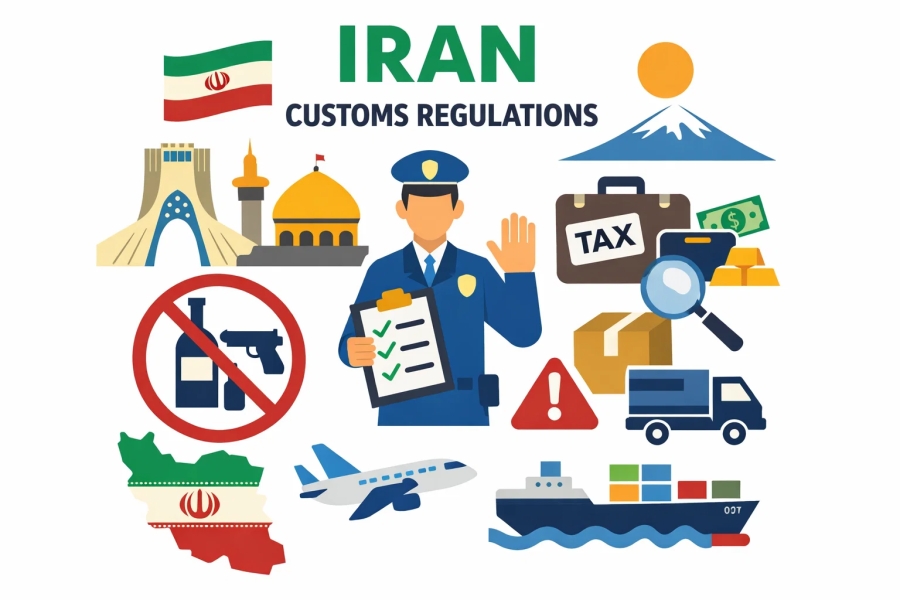
Navigating the complexities of Iranian customs regulations is a prerequisite for any business looking to engage with the Iranian market. As a bridge between East and West, Iran maintains a robust and evolving customs environment that demands high levels of transparency and legal precision.
What is Customs and Why It Matters in Iran
Customs in Iran is a governmental agency responsible for cross-border movement of goods, the collection of duties, and enforcement of the Export-Import Regulations Act of Islamic Republic of Iran. It acts as the operational arm of the state’s trade policy, translating macroeconomic decisions into border-level controls.
The significance of customs in Iran goes beyond mere border formalities for three main reasons:
- Currency & Financial Settlement: A customs declaration triggers the Central Bank to settle foreign exchange commitments. Failing to comply with Iran customs laws can result in defaults known locally as Peyman-Arzi, which carry severe banking and legal consequences.
- Economic Protectionism: Customs enforces high tariffs and Group 4 bans under the Export-Import Regulations Act to protect domestic industries, directly affecting the market viability of imported goods.
- Legal Enforcement (Infractions vs. Smuggling): Under the Iran customs law framework, the administration distinguishes between clerical errors and criminal intent. Accurate customs clearance in Iran ensures legal compliance and prevents cargo seizure.
Overview of Iranian Customs Authority and Legal Framework
The primary authority overseeing all border activities is the Islamic Republic of Iran Customs Administration (IRICA), known locally as Gomrok. IRICA operates under the Ministry of Economic Affairs and Finance.
The Iran customs law framework is primarily anchored in two major pieces of legislation:
- The Law of Customs Affairs (2011): The primary statute defining the powers of IRICA, the rights of traders, and the fundamental rules of valuation and classification.
- The Export-Import Regulations Act of Islamic Republic of Iran: An annually updated act that outlines the specific "Rule of the Game" for each Iranian calendar year, including prohibited items and tariff changes.
This legal structure is supported by the Electronic Patch Line (EPL) system, which has digitized customs clearance in Iran, making the legal framework more data-driven and integrated with other governmental bodies like the Central Bank and the Ministry of Industry, Mine, and Trade (MIMT).
Types of Customs Procedures in Iran: A Strategic Framework
Understanding the specific customs procedures in Iran is essential for determining the financial and legal obligations of your shipment. Under the Iran customs law framework, goods entering or leaving the country are categorized into several distinct procedures, each governed by specific articles of the Law of Customs Affairs.
Definite Import
Definite Import is the most common procedure for businesses bringing goods into the Iranian market for domestic consumption. Under Iranian customs regulations, this process involves the payment of import duties, taxes, and commercial profit (Sood-e Bazargani).
- Key Requirement: To complete customs clearance in Iran for definite imports, the importer must obtain an "Order Registration" from the Ministry of Industry, Mine, and Trade (MIMT) and ensure currency allocation through the Central Bank of Iran (CBI).
- Compliance Tip: Ensure your HS Code is accurately declared, as any discrepancy can lead to heavy fines under the category of "Customs Infractions."
Definite Export
The Iranian government actively encourages non-oil exports. Definite Export refers to the permanent shipment of Iranian-made or processed goods to foreign destinations.
- Tax Benefits: Most definite exports are exempt from domestic taxes and duties to boost international competitiveness.
- Customs Rules: Exporters must comply with the Export-Import Regulations Act of Islamic Republic of Iran, which may periodically restrict the export of certain raw materials to ensure domestic supply.
Temporary Admission and Temporary Export
For goods intended to stay in Iran for a specific period—such as machinery for a construction project, items for international exhibitions, or raw materials for processing and re-export—the Temporary Admission procedure is used.
- Financial Security: Instead of paying full import duties, traders typically provide a bank guarantee or deposit to IRICA.
- Temporary Export: This applies to Iranian goods sent abroad for repair, processing, or display at exhibitions, with the intent of returning to the country without being subject to new import taxes.
Transit Regulations: Internal and External Transit
Due to its strategic location, Iran is a vital corridor for international trade and customs regulations.
External Transit (Foreign Transit): This refers to goods moving from one foreign country to another via Iranian territory. These goods are sealed at the entry port and monitored via the EPL system until they exit the country. They are exempt from standard import duties but require a transit bond.
Internal Transit: This procedure allows the movement of uncleared goods from one Iranian customs office (e.g., Shahid Rajaee Port) to another (e.g., Tehran West Customs) where the final customs clearance in Iran will take place. This is often done to bring goods closer to the final destination or a specialized bonded warehouse.
The Step-by-Step Customs Clearance & Transit Process
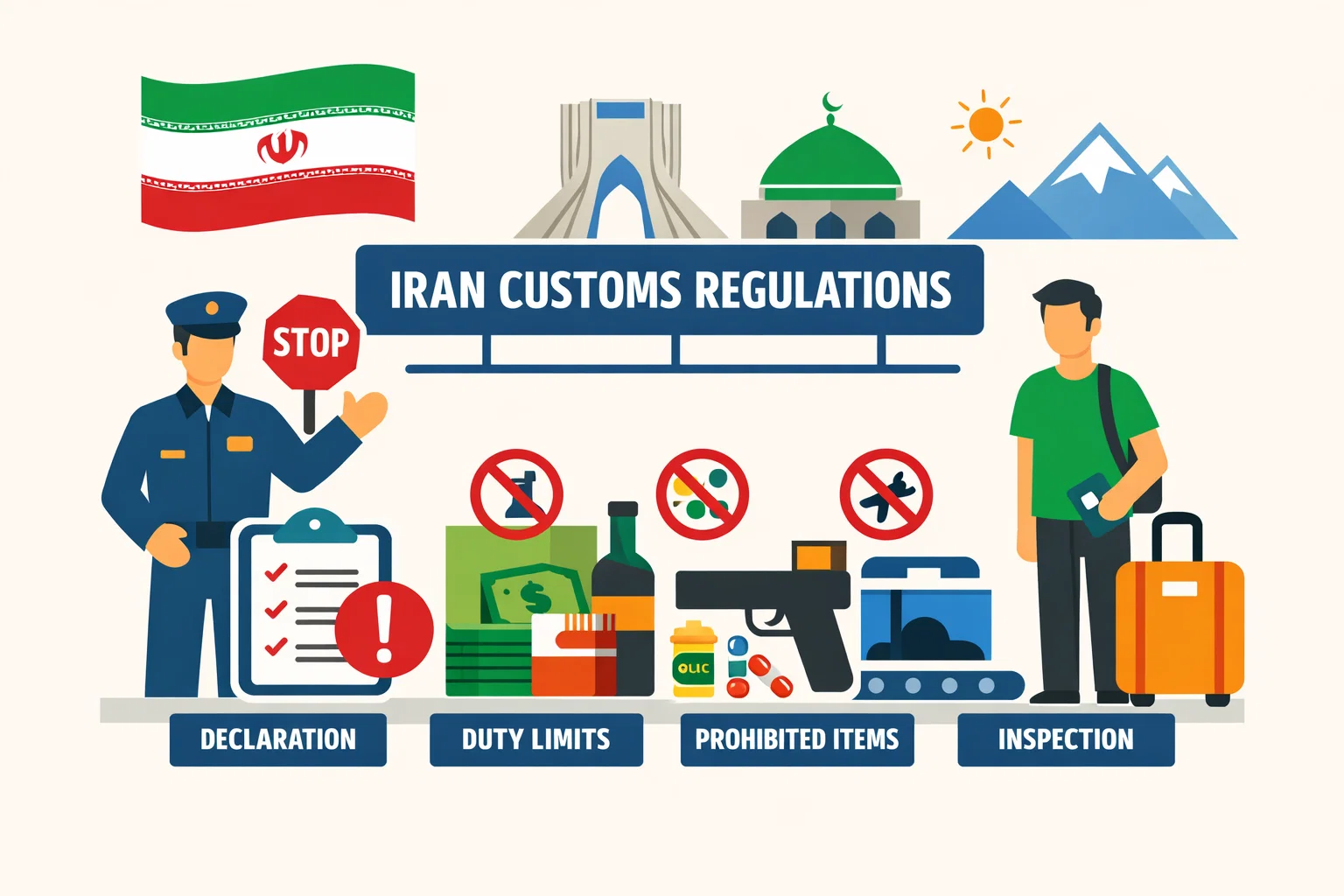
Whether you are importing for the local market or using Iran as a transit hub, the procedure follows a strict digital and physical workflow. Under Iranian customs regulations, the process is divided into "Import for Consumption" and "International Transit."
Phase 1: Pre-clearance & Order Registration
For imports, this stage is mandatory to ensure Iran customs compliance.
- Order Registration (Sabt-e Saresh): All importers must register through the National Trade Single Window (NTSW).
- Currency Allocation: Verification by the Central Bank to ensure the transaction follows Iran trade and customs regulations.
Phase 2: Essential Documentation for Global Trade
To comply with laws and regulations for import, export, transit and customs clearance in Iran, a precise set of documents is required. These documents act as the legal identity of the cargo and must align with the data entered into the EPL system.
1. Standard Trade Documents (For all procedures):
- Commercial Invoice: Must clearly state the Incoterms, unit price, and total value.
- Packing List: Detailed breakdown of the contents, including net and gross weight.
- Bill of Lading (B/L) / Waybill: The primary document of title for sea, air, or road transport.
- Certificate of Origin (C/O): Usually legalized by the Chamber of Commerce in the exporting country.
2. Specific Documents for International Transit:
If you are moving goods through Iran (Transit) to a third country, the requirements follow international transit treaties:
- TIR Carnet: Iran is a highly active member of the TIR Convention. Using a TIR Carnet simplifies the Iran customs law framework by replacing national credit guarantees with an international guarantee.
- Transit Manifest: A summary of the goods being transported across borders.
- International Insurance Policy: To cover potential risks during the transit period within Iranian territory.
3. Specific Documents for Definite Import:
- Proforma Invoice: Required for the initial Order Registration in the NTSW system.
- Inspection Certificate (IC): Often required for technical or food items to ensure compliance with Iranian national standards.
Phase 3: The Operational Steps & The "Three-Path" System
Once the cargo arrives at an Iranian port (like Bandar Abbas) or a land border (like Bazargan), it enters the EPL (Electronic Patch Line).
1. Declaration (Ezhar)
The Customs Broker or Transit Agent submits the declaration. The system assigns a Cottage Number, which is the legal tracking ID for the shipment.
2. The Selectivity System (Green, Yellow, and Red Paths)
To streamline customs clearance in Iran, IRICA uses an automated risk management system:
- ✅ Green Path: Documentary check only; usually for low-risk goods or "A-list" companies.
- ⚠️ Yellow Path: Expert review of documents and valuation without physical opening of the cargo.
- ❌ Red Path: Mandatory physical inspection, laboratory testing (if needed), and full documentary audit.
3. Specific Procedure for International Transit
For goods transiting through Iran (e.g., from Russia to India or Turkey to Central Asia):
- Sealing: After inspection, IRICA applies high-security electronic or lead seals.
- Time-Limited Movement: The carrier is assigned a specific route and a strict "Transit Duration" (GPS tracking is often required).
- Termination: The procedure is only closed once the exit customs office confirms the seals are intact and the goods have left the country.
4. Payment and Release
- Duties & Taxes: Calculated based on the Export-Import Regulations Act.
- Warehouse Receipt: Final settlement with the port or terminal authorities.
- Green Permit (Parvaneh): The digital certificate allowing the cargo to leave the customs zone.
|
Feature |
Definite Import |
International Transit |
|
Customs Duties |
Full Payment (Tariff + VAT) |
Exempt (Guarantees required) |
|
Key Document |
Order Registration (Sabt-e Saresh) |
TIR Carnet / Transit Manifest |
|
Market Access |
Local Iranian Markets |
Only for Crossing Borders |
|
Primary Risk |
Valuation & HS Code Accuracy |
Route Deviation & Seal Integrity |
Classification and Valuation (HS Codes & TSC)
Accurate classification is the foundation of Iran customs compliance. Misclassification can lead to delays and heavy penalties under the Iran customs law framework.
- HS Code System in Iran: Iran follows the Harmonized System (HS). However, the Export-Import Regulations Act often adds specific national sub-headings (8-digit codes) that determine precise tariff rates.
- The TSC System (Tariff System Customs): To prevent under-invoicing, IRICA uses the TSC System, a comprehensive database of accepted values for goods. If your declared invoice value is significantly lower than the TSC value, customs will reassess your duties based on their internal database.
- Import Duties: These consist of the "Customs Duty" (fixed) plus "Commercial Profit" (variable), which are calculated as a percentage of the CIF (Cost, Insurance, and Freight) value.
4. Mandatory Certifications & Standards
Beyond the customs law in Iran, many products require specific "Entry Permits" from third-party regulatory bodies before they can be cleared.
- ISIRI (National Standards Organization): Most industrial, electrical, and automotive parts must comply with Iranian national standards. An inspection certificate (IC) from an international agency (like SGS or Intertek) is often required.
- IFDA & Health Permits: Food, cosmetics, and pharmaceuticals require a "Health Permit" from the Iran Food and Drug Administration (IFDA).
- Quarantine: Agricultural and livestock products are subject to strict plant or animal quarantine inspections by the Ministry of Jihad-e-Agriculture.
5. Free Trade Zones (FTZs) vs. Mainland
Iran offers strategic advantages through its Free Trade Zones (FTZs) and Special Economic Zones (SEZs), which operate under different rules than the mainland.
- Key Zones: Kish, Qeshm, Chabahar, Anzali, and Arvand are the primary hubs.
- Customs Advantages:
- Duty-Free Entry: Goods entering FTZs for use within the zone are exempt from import duties.
- Value-Added Rule: If you manufacture goods in an FTZ using a percentage of local raw materials, you can export them to the mainland with significant tariff reductions.
- Simplified Transit: FTZs act as ideal "Logistics Hubs" for international trade and customs regulations, offering easier re-export procedures compared to the mainland.
|
Feature |
Mainland Territory |
Free Trade Zones /FTZs |
|
Import Duties |
Full payment required |
Exempt within the zone |
|
Visa Requirements |
Standard visa |
Visa-free entry for most zones |
|
Tax Holiday |
Standard corporate tax |
Up to 20 years exemption |
|
Order Registration |
Mandatory via NTSW |
Simplified or exempt |
The Strategic Necessity of Professional Assistance
The complexity of the Iran customs law framework means even a minor error in the EPL system can lead to heavy fines or cargo seizure. In this environment, the role of an expert freight forwarder is not just logistics, but risk management.
Navigating the Export-Import Regulations Act requires a partner who understands both the written law and the operational reality at the borders. Engaging a qualified Customs Clearance Agent in Iran ensures your HS Codes are accurate, valuations are defensible, and your transit through Iran remains seamless and compliant.
This guide was prepared by SASCO to assist professionals in streamlining their trade operations in Iran.